
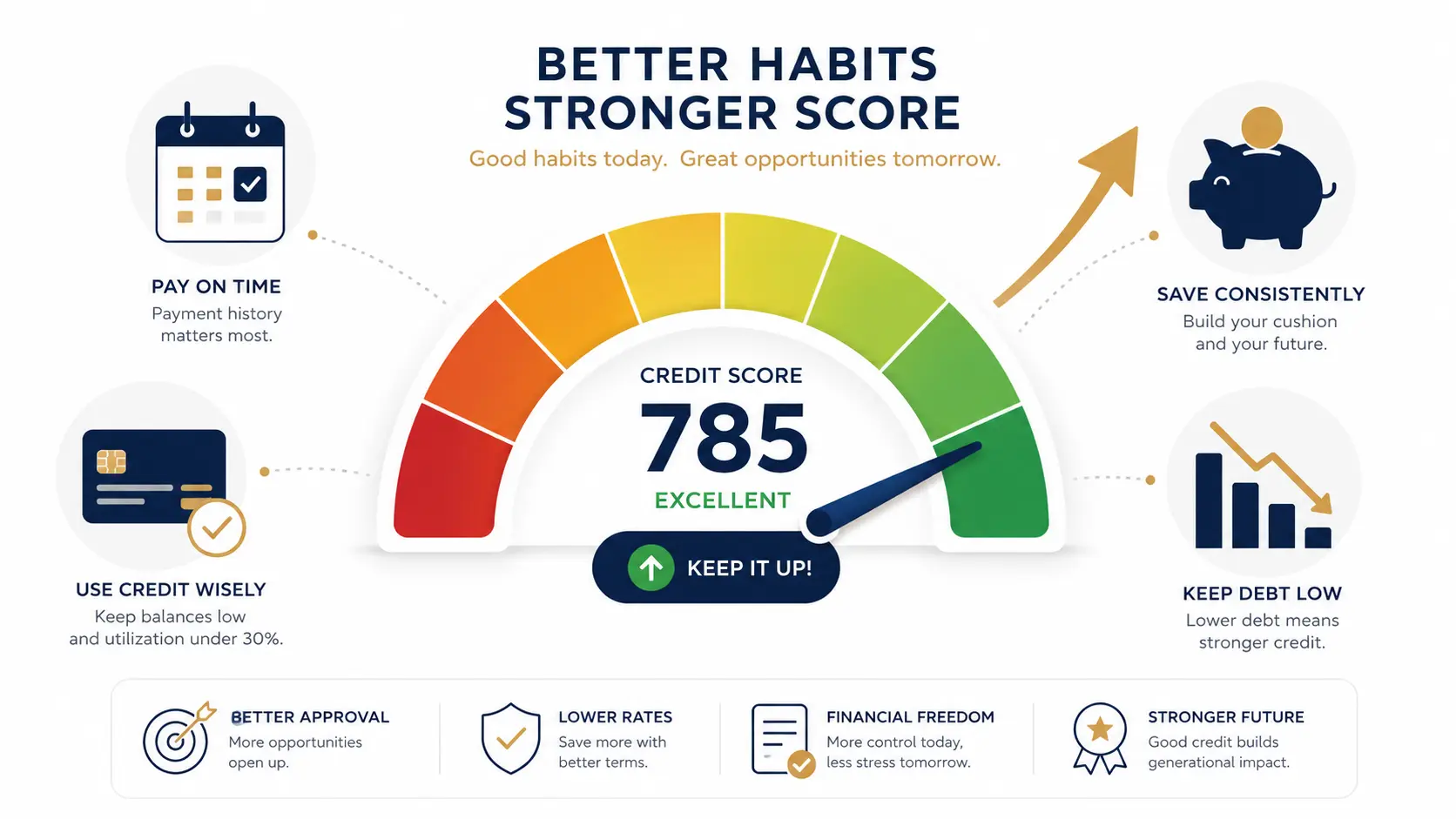
Payment history is one of the most important factors affecting your credit profile, so paying bills on time matters most. Even one missed payment can hurt your score. Set up automatic payments or reminders so you never miss a due date consistency builds credibility with lenders and strengthens your financial foundation.
High balances compared to your credit limits can lower your score. To lower credit utilization, aim to stay below 30% of your limits and ideally under 10% for the best results. Making multiple payments throughout the month helps keep balances down.
Errors on credit reports are more common than people realize. Checking your reports helps you spot inaccuracies, outdated information, or signs of identity theft early. Our credit monitoring service makes this easy, and you can get free reports at AnnualCreditReport.com.
Each credit application can trigger a hard inquiry, which may temporarily lower your score. Opening several accounts in a short period can signal risk to lenders. Apply for new credit only when necessary and with a clear financial purpose.
A combination of credit types credit cards, installment loans, or auto loans can strengthen your profile when managed responsibly. The key is maintaining a positive payment history across all accounts.
A clear budget helps you understand where your money goes and prevents overspending. Track income, expenses, and savings goals to stay balanced. Budgeting reduces stress and supports smarter decisions a foundation for building good credit habits.
Focus on paying down high-interest debt first while keeping up minimum payments on other accounts. Reducing overall debt improves your financial flexibility and credit health. Small, consistent payments lead to meaningful progress over time.
Unexpected expenses happen, and having savings set aside prevents you from relying on credit during emergencies. Even saving a small amount regularly can provide valuable financial security and protect your credit.
Closing older accounts can shorten your credit history and potentially lower your score. If there's no annual fee, consider keeping older accounts open to maintain a longer credit history.
Whether you're planning to buy a home, start a business, or improve your credit score, clear goals keep you motivated and focused. Break larger goals into smaller steps to track progress and celebrate milestones.
Improving your credit is a process, and you don’t have to navigate it alone. With the right guidance, tools, and education, you can take meaningful steps toward stronger financial health and greater confidence. Bull Heroes is committed to helping you build knowledge, take action, and move forward with clarity with no upfront promises, just real, honest support. You can also explore more free tools on our resources page.

Lowering your credit utilization (paying down card balances) and making sure every payment is on time tend to have the quickest impact. Correcting any inaccurate negative items can also help. Results vary by profile.
It depends on your starting point. Some people see movement within a couple of months of consistent habits, while building a strong profile typically takes six months to a year or more.
No. Checking your own score is a soft inquiry and never affects your credit, so you can monitor your progress as often as you like.
Keeping utilization below 30% of your limits is a good target, and under 10% is even better for your score.
Yes. Beyond these tips, our specialists can review your reports, dispute inaccurate items, and build a personalized plan. Book a free analysis to get started.
Small changes today can lead to big results tomorrow. Stay consistent, stay informed, and keep moving toward your financial goals with confidence. When you’re ready for personalized help, Bull Heroes is here.